
The Cost of Performance: The Book for Men Whose Confidence Does Not Match Their Results
The Book · 5 min read · By Jerome Fletcher
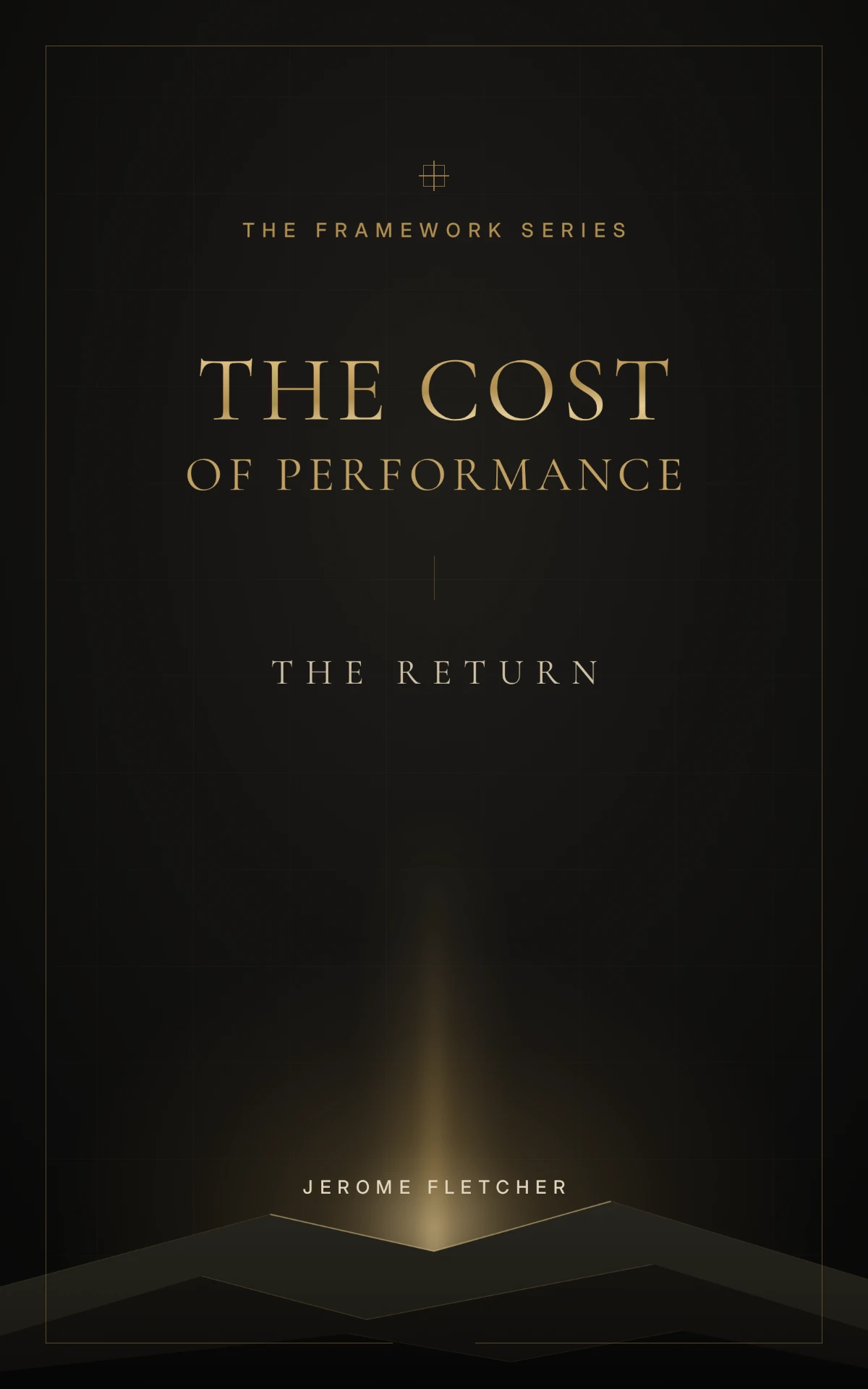
There is a particular kind of man this book was written for. His results are real: the career, the responsibility, the people who rely on him and are right to. From the outside, confidence should be the easy part. From the inside, he knows the performance costs more every year, and the man paying for it is him.
The Cost of Performance, The Return to Self, by Jerome Fletcher, is a grounded, reality based guide built on one argument most confidence advice gets backwards: most men do not struggle with self esteem because they lack confidence. They struggle because they lack structure. Confidence is not the input. It is the receipt.
The argument
Self help for men tends to start with mindset: believe harder, affirm louder, visualise the man you want to be. This book starts with behaviour. Self esteem is built through action, through promises made to yourself and kept where no one is watching. A man trusts himself the way he trusts anyone else: by watching what he does over time.
That is where the title earns its meaning. Performance, in this book, is not achievement. It is the gap between the self a man presents and the self he lives with: the competence performed at work, the calm performed at home, the certainty performed everywhere, while self trust quietly erodes underneath. The cost of that gap compounds. The return to self is the work of closing it, not with a reinvention, but with structure: decisions made lighter by discipline, identity strengthened by responsibility instead of crushed by it, and confidence rebuilt the only way it actually holds, through evidence.
What is inside
The book works through six ideas, each one practical enough to use the week you read it:
Why self esteem is built through behaviour, not mindset. How discipline and structure make decisions feel lighter to carry. The difference between confidence you feel and confidence you can rely on. Why responsibility strengthens identity instead of crushing it. How men quietly lose self trust, and how to rebuild it. And practical frameworks for the four rooms where this plays out: work, relationships, money, and leadership.
None of it requires a dramatic life overhaul. The frameworks are built for ordinary days, because ordinary days are where self trust is actually won or lost.
Behaviour before mindset. The book's first move is to stop treating confidence as a feeling to be manufactured and start treating it as evidence to be collected. A man who keeps small promises to himself, the training done, the hard conversation had, the work finished when he said it would be, is building a record. Self esteem reads that record.
Structure that lightens decisions. Much of what men call exhaustion is actually decision weight: hundreds of small choices renegotiated daily because nothing is settled. Discipline, in this book, is not punishment. It is pre decision. Structure settles the recurring questions in advance, so a man's energy goes to the few decisions that deserve it.
Confidence you can rely on. Felt confidence rises and falls with sleep, weather, and results. Relied on confidence is different: it is the calm of a man who has watched himself do hard things repeatedly and no longer needs to hype himself up to begin. The book is interested in the second kind, because the first kind abandons men exactly when life gets expensive.
Responsibility as strength. Many men experience responsibility as the thing crushing them. The book reframes it: responsibility, carried inside a structure that also protects the man carrying it, is what strengthens identity. The problem is rarely the weight. It is carrying the weight with no architecture and calling the damage commitment.
Self trust, lost and rebuilt. Self trust rarely collapses in one event. It leaks: the start deferred, the standard quietly lowered, the promise to himself treated as negotiable in a way a promise to an employer never would be. The rebuild runs the same road in reverse, small kept promises, compounded. Pause long enough to see the pattern. Reframe what it is costing. Return with one standard, kept.
Who it is for, and who it is not
It is for the man who is doing enough on the outside and quietly wants his inside to match. A founder carrying a company, an executive carrying a team, a father carrying a household, or any man whose competence is not in question and whose peace is.
It is not therapy, and it does not pretend to be. It is not motivation either; nothing in it asks you to get fired up. If you are looking for a system for building self respect through discipline, responsibility, and real world competence, written in plain language by a man who has carried weight inside large institutions and his own life, this is that book. If you are in crisis or need clinical support, start with a qualified professional. This book will keep.
About the author and the series
Jerome Fletcher spent 15 years inside one of America's largest academic medical institutions, USC's Keck School of Medicine, in roles including Chief of Staff and Senior HR Business Partner, watching capable people carry more than their structure could hold. He holds an MBA and a background in psychology. The Cost of Performance is part of The Framework Series, the written arm of The Framework Hub, his human restoration platform, and the same thinking runs through its retreats, its coaching, and the Framework Companion app: Pause. Reframe. Return.
How to read it
The book is available through The Framework Hub's book page, with checkout handled securely by Gumroad. Read it in order the first time; the argument builds. Then keep it where you work. Most men who write to us about it did not underline the chapters. They underlined the sentences that described their Tuesday.
The Cost of Performance, The Return to Self, by Jerome Fletcher. Available now via the book page at The Framework Hub. For a buyer's filter on the whole shelf, read books on burnout for men on how to choose one that actually helps.