
Life After Service: Why Structure Matters More Than Motivation for Veterans
Veterans · 5 min read · By Jerome Fletcher
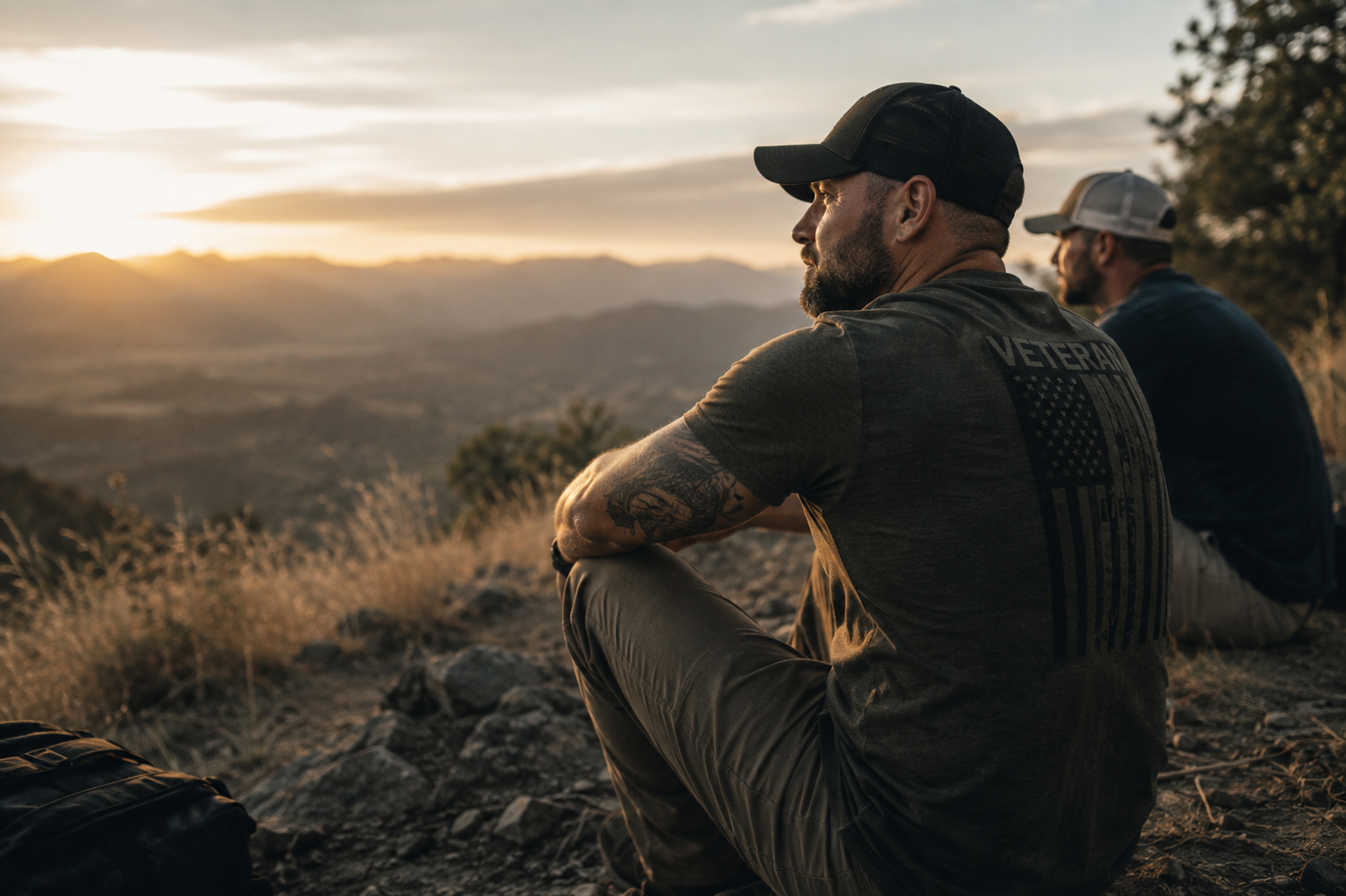
Nobody warns you about the quiet. In service, the day arrives pre built: the time you rise, the standard you meet, the people beside you, the mission that orders all of it. Then service ends, and a man who ran complex operations under pressure finds himself standing in a quiet kitchen at 10 in the morning, fully capable, completely unstructured, and surprised by how hard that is.
This is the part of transition that briefings underplay. The challenge of life after service is rarely competence. Veterans leave with skills most civilian employers cannot train: leadership under load, accountability, calm in a crisis. What disappears overnight is not ability. It is the architecture that ability lived inside: structure, identity, and a unit.
What is actually lost
It helps to name the three losses separately, because each one asks for something different.
Structure. Military life is scaffolded. The day has a shape, the week has a rhythm, and expectations are explicit. Civilian life, for all its freedom, hands you a blank calendar and calls it opportunity. Men who thrived inside a demanding structure often struggle inside an empty one, and then misread that struggle as a personal failure. It is not. It is an architecture problem.
Identity. In service, who you are is legible: rank, role, unit, reputation earned in front of witnesses. Out of service, a veteran becomes "a veteran," a past tense identity, and the question of who he is now goes unanswered for longer than anyone admits. Work helps, but a job title does not replace an identity built over years.
The unit. Service is lived in a small group that knows the cost of the work because they carry it too. Civilian friendships are real, but they rarely include shared stakes. Many veterans are surrounded by people and still carrying things alone, not because no one cares, but because no one in the room knows what the weight is.
Notice what is not on that list: motivation. Most veterans in a hard transition are not unmotivated. They are unstructured, between identities, and missing their unit. Advice that offers motivation to a man with an architecture problem misses the man entirely.
What helps, in practice
The veterans who navigate transition well tend to rebuild the same three things, whether they would use those words or not.
A daily structure they chose. Not a copied military schedule, and not a productivity system borrowed from the internet. A small number of fixed points in the day: rise time, physical training, work blocks, family time protected like an appointment. The content matters less than the fact that the day has edges again. Structure is not restriction. For a man trained inside it, structure is what freedom feels like when it works.
An identity built forward. The question is not how to stay who you were. It is who you are becoming, stated in present tense and proven in small actions: the trade being learned, the business being built, the father, husband, or neighbour being shown up as. Identity after service is rebuilt the same way it was built in service: through behaviour, witnessed over time.
A small group with shared stakes. A pod, a cohort, a team, a men's group with real accountability: some room where the standard is known and the men in it will notice if you disappear. It does not need to be made of veterans to help, but rooms built for veterans carry a shorthand that saves months of explaining.
Underneath all three sits one move: pause long enough to see your own life clearly, reframe what this season is actually asking of you, and return to it deliberately. Pause. Reframe. Return. It is simple enough to remember on a hard day, which is when frameworks earn their keep.
What organisations get wrong
For the organisations reading this, the units, foundations, and employers who commission transition support: the common failure is offering inspiration where structure was needed. A moving speech lasts a weekend. A keynote cannot hold a Tuesday. What veterans consistently use is programming with a spine: a defined arc, a cohort moving through it together, practices that fit inside an ordinary day, and follow through measured in months, not applause.
The other failure is treating transition as purely clinical or purely vocational. Some veterans need clinical care, and when they do, they should get it from qualified professionals without delay or stigma. But many veterans are not patients. They are capable people between structures, and they need building, not only treatment. Good support knows the difference and refuses to confuse the two.
Where The Framework Hub fits
The Framework Hub is building a veterans pathway on exactly this ground: structure after service, delivered in cohorts, commissioned through organisations: a unit, a veterans service, or a foundation, rather than sold to individuals. That pathway is not running yet, and we would rather say that plainly than sell you a date we cannot honour. When it runs, it will run properly: practised frameworks, a cohort beside you, and integration that continues after the intensive ends.
If you are a veteran, you can register your interest and we will write once, when there is something real to offer. If you are an organisation that serves veterans and wants to talk about commissioning, the same door is open. No list, no noise.
And if you are a veteran reading this in a hard season: the absence of structure is not the absence of worth. You ran on architecture before. You can build it again, on purpose this time.
Jerome Fletcher is the founder of The Framework Hub. He holds an MBA and a background in psychology, and he is not a licensed therapist. This article is education, not clinical care. Veterans in crisis in the United States can call or text 988 and press 1 for the Veterans Crisis Line, at any hour.